Why Choosing the Right Stretching App Actually Matters
Stretching looks simple. You lean forward, feel a pull, hold for a few seconds. How much can an app really affect that?
More than most people realize. The difference between a mediocre stretching app and a genuinely good one comes down to a single word: personalization. Your hamstrings, hip flexors, and thoracic spine have their own current state of tension and restriction — completely different from the person next to you. A generic program that tells everyone to hold for 30 seconds is optimizing for nobody.
The best stretching app for you is one that begins with where your body actually is right now, assigns exercises appropriate for your specific restrictions, and progresses at a pace your nervous system and connective tissue can actually adapt to. Without that starting assessment, you're guessing — and guessing with flexibility training leads to either zero progress or injury.
Beyond personalization, expert guidance quality is the second most important factor. Most apps show you what to do. The best ones tell you why — which muscles are working, what you should feel versus what signals you've gone too far, and how to breathe through a stretch effectively. That explanatory layer is the difference between copying positions and actually training your body.
Safety is the third pillar. Flexibility training carries real injury risk when done without structure or at the wrong intensity. We paid close attention to how each app approaches progressive loading, beginner accessibility, and whether the content teaches body awareness alongside technique.
How We Evaluated Each App
We scored every app across five equally-weighted criteria, each rated 1–10:
- Personalization & AI — Does the app adapt to your individual body? Does it use real technology to assess your starting level, or just ask you to self-report?
- Expert Guidance Quality — Who built the content? Are mechanics and cues explained, or is it just "copy this"?
- Safety & Structure — Is there a progressive structure? Does the app teach you to distinguish productive discomfort from pain?
- Progress Tracking — Can you measure improvement over time? Are there objective metrics, not just session completion?
- Content Depth & Variety — Is there enough content for long-term use across different goals and levels?
We tested every app ourselves, read thousands of user reviews, and consulted with flexibility practitioners. The scores you see below reflect that research, not affiliate arrangements.
The 10 Best Stretching Apps, Ranked

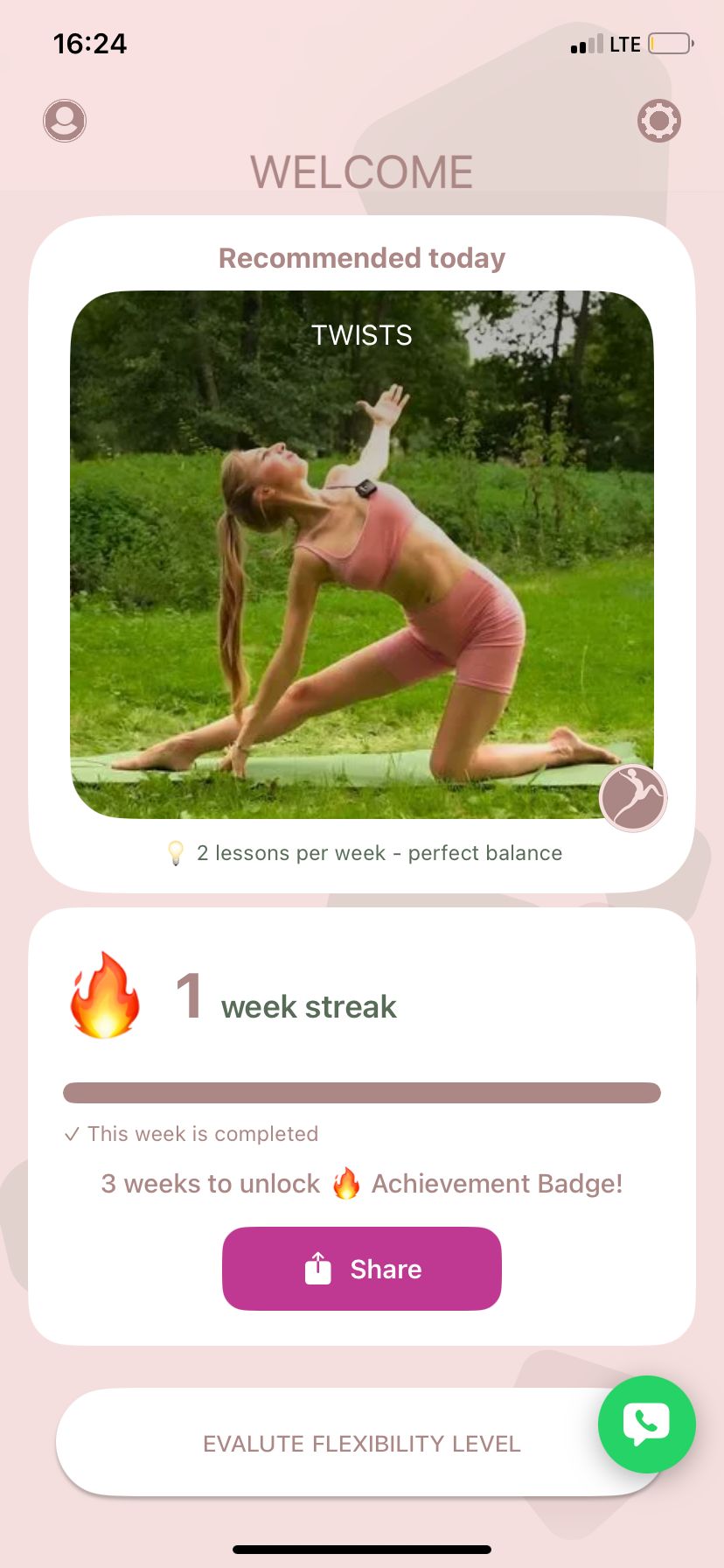
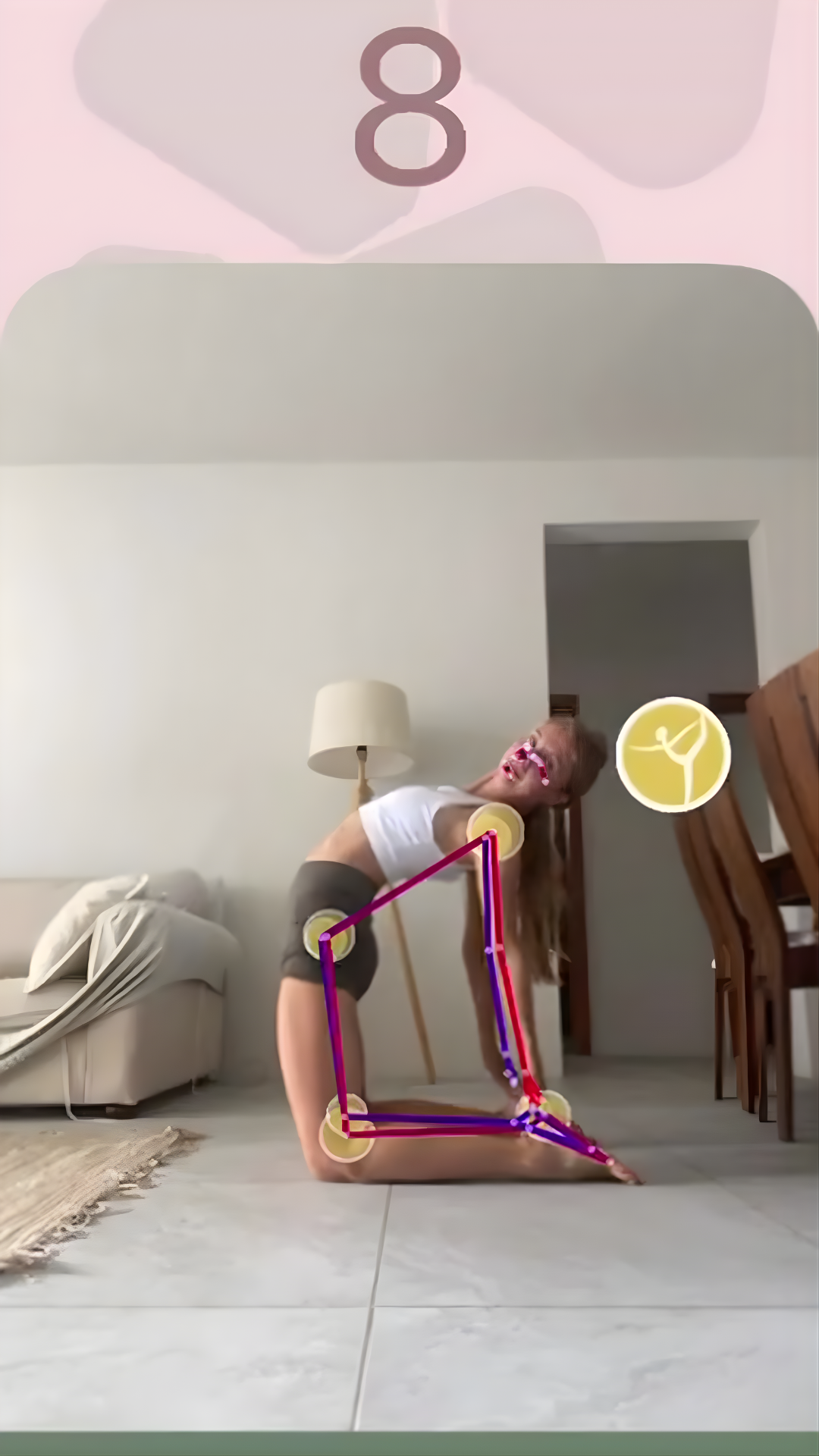
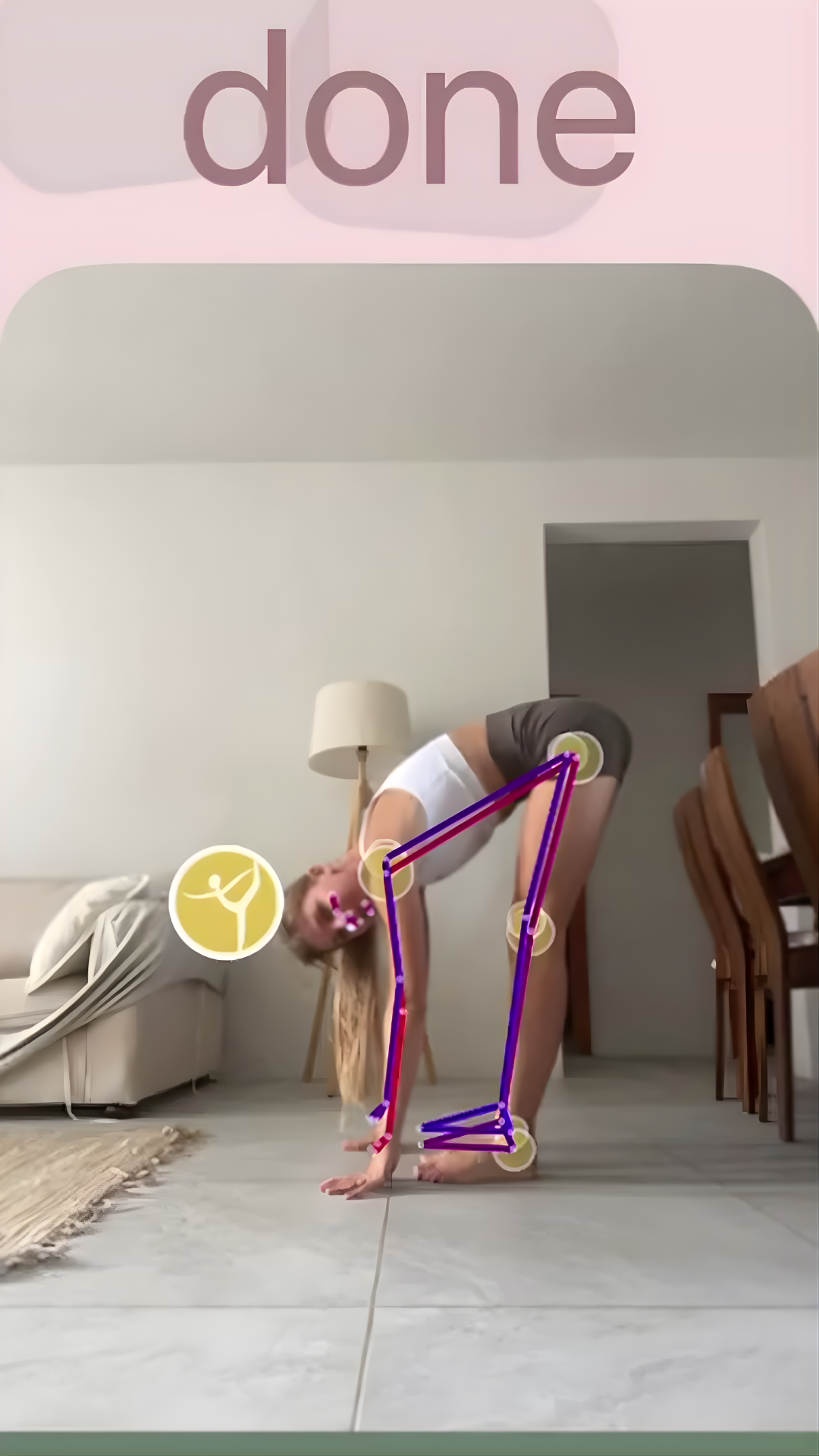
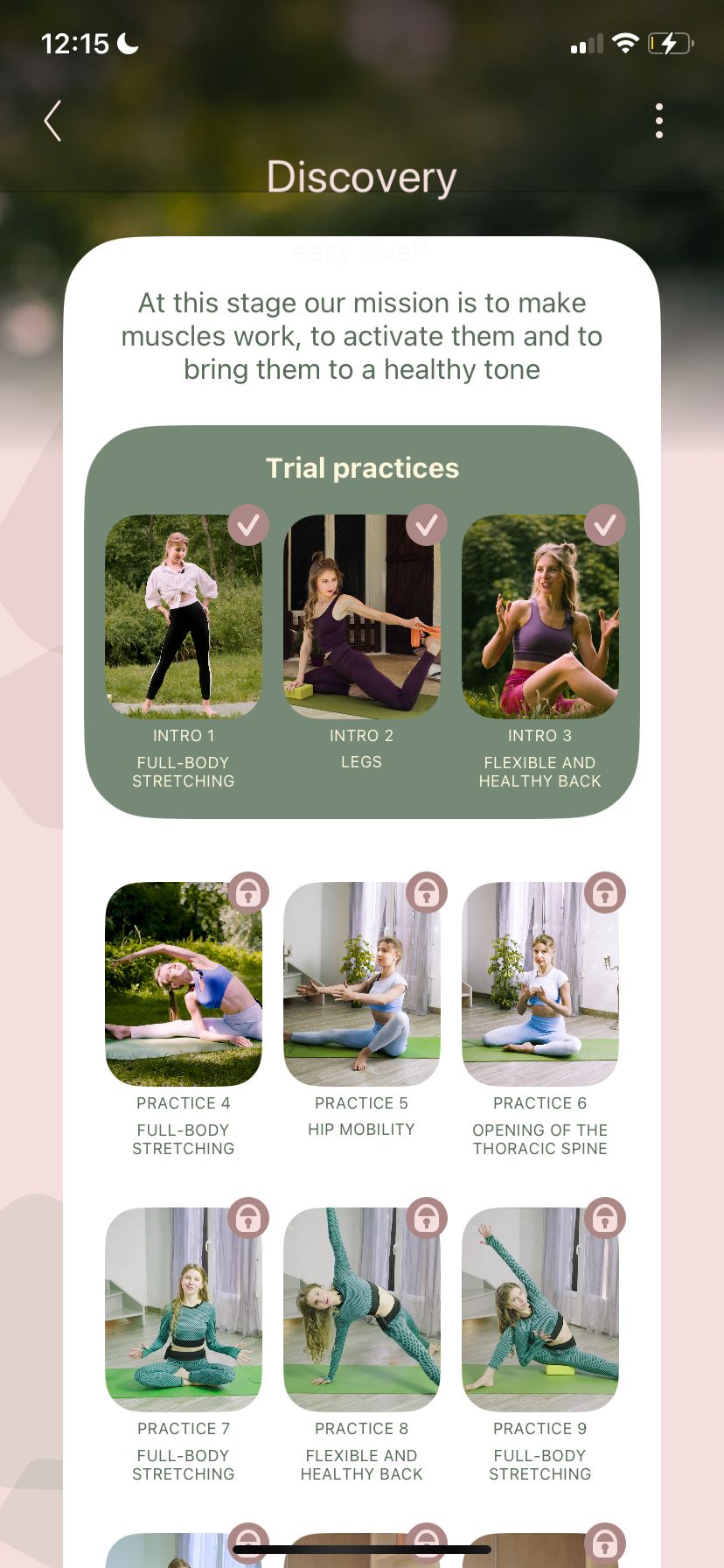
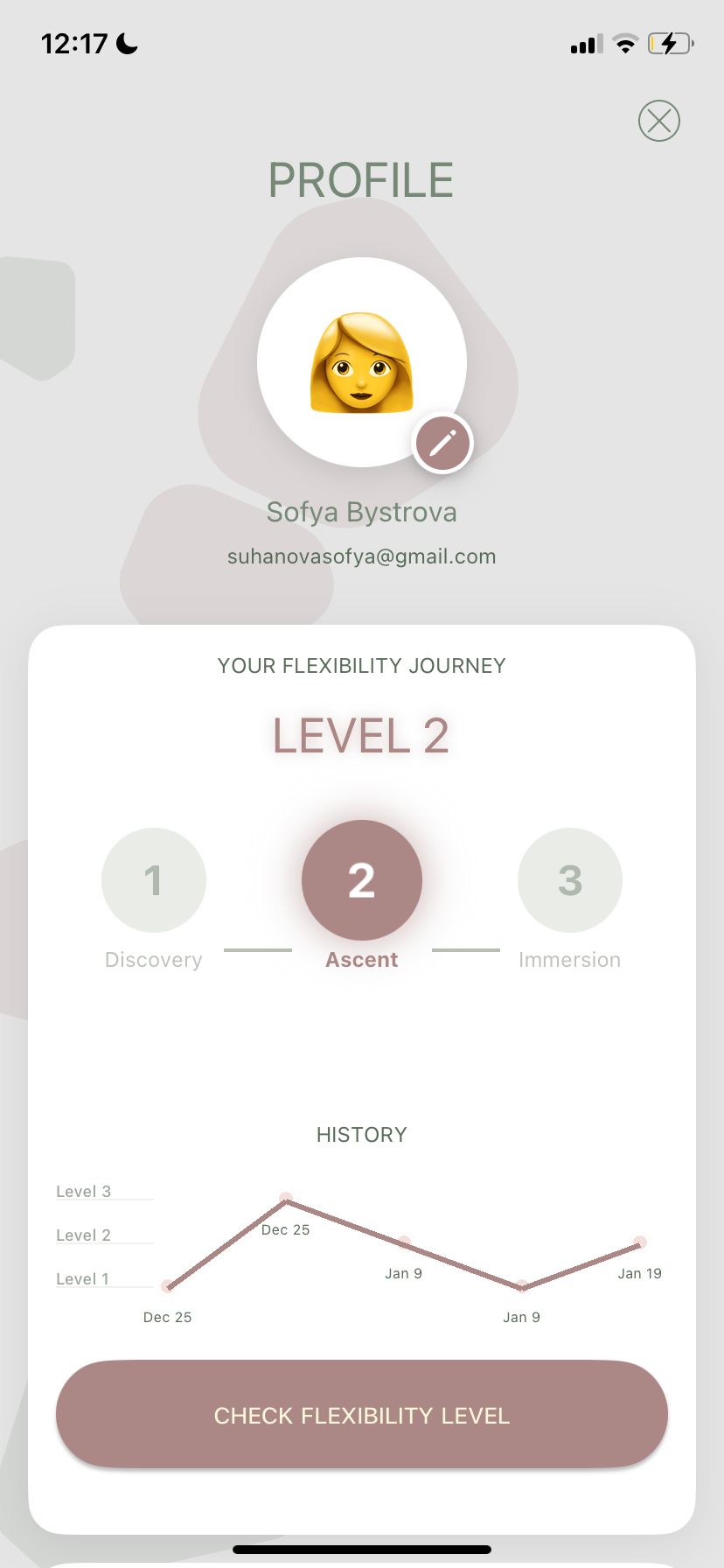
So Happy Stretching earns the top spot on our best stretching app ranking by solving the fundamental problem every other app on this list leaves unaddressed: it measures your actual body before giving you a program.
Using AI-powered camera technology, the app's Smart Flexibility Assessment measures your real range of motion in under five minutes. You stand in front of your phone, follow a series of guided movements, and the AI tracks your joint angles to determine your exact flexibility level across multiple muscle groups. The result isn't a "beginner/intermediate/advanced" label — it's a genuine measurement of where your body is today.
From that measurement, the app assigns you a program built by Sofya Bystrova, a professional dancer and choreographer with 20 years of expertise who developed a proprietary flexibility methodology designed for people who aren't professional dancers. The methodology is structured across three levels — Discovery, Ascent, and Immersion — each with 60+ expert-led video sessions.
What sets Sofya's content apart from every other trainer-led content we reviewed is the emphasis on education. She doesn't just show you what to do — she explains why. Which muscles are being targeted. What you should feel versus what means you've gone too far. Why breathing at a specific moment matters. If you've ever done a stretch without really knowing whether you were doing it correctly, this explanatory layer feels genuinely revelatory.
The progress tracking completes the picture: you can re-take the AI assessment at any time, compare your measurements to your starting point, and watch your flexibility improve with objective data. Most apps tell you to "notice how your body feels." So Happy Stretching shows you the numbers. Users on the Stories page regularly report going from Level 1 to Level 2 in 6–8 weeks of consistent practice.
of So Happy Stretching users report feeling noticeably more mobile after just 4 weeks of consistent practice
StretchIt is a well-produced flexibility app with a strong library of video sessions led by qualified trainers. Content quality is genuinely high — the app covers splits, backbends, hip opening, and hamstring work — and session lengths are practical (10–30 minutes). Visual production is clean, instructor presence is warm and motivating.
Where StretchIt falls short is personalization. There's no assessment of any kind — you choose your goal, pick a program, and begin. For someone who already understands their body and knows what they need, this works fine. For someone starting from scratch or trying to diagnose why their progress has stalled, the absence of individual baseline data is a real limitation. You're told what to do without the app knowing whether it's appropriate for you specifically.
Pliability (formerly ROMWOD) was built specifically for athletes — originally for CrossFit and functional fitness — and that heritage shapes everything from the session intensity to the instructor language. If you're training for performance and need mobility work that genuinely supports sport, Pliability does this better than most apps.
For the average person looking to improve general flexibility, however, the athletic framing can feel alienating, and the pacing is often more aggressive than appropriate for someone new to stretching. The lack of a true beginner track is a significant limitation. It's a strong tool in the right hands; not the right starting point for most people.
#4 Down Dog — 7.5/10
Down Dog built its reputation on highly customizable yoga sessions, and it genuinely delivers. You can adjust session length, pace, music, focus area, and intensity — the result feels more personalized than most yoga apps. Many sessions are effectively stretching routines, and the flexibility benefits are real. The limitation: Down Dog is yoga-first. If you want a dedicated stretching methodology with structured progression and movement mechanics explained, you're working around the yoga framing to find it. Excellent yoga app, good flexibility byproduct — not a dedicated stretching system.
Best for: People who enjoy yoga and want flexibility gains as part of the practice.
#5 Glo — 7.3/10
Glo is a premium subscription platform for yoga, Pilates, and meditation with a meaningful amount of flexibility-focused content. Teacher quality is consistently high, and the platform has a mature, developed feel that cheaper competitors lack. At its price point, Glo demands serious use. The content library is rich, but finding the right progression for a specific flexibility goal requires curation on your part — there's no assessment, no adaptive programming. You're browsing a library of excellent content and building your own structure.
Best for: Dedicated practitioners who want premium library access and enjoy self-directing their practice.
#6 Alo Moves — 7.0/10
Alo Moves is connected to the Alo Yoga brand, and the production quality reflects that: beautiful settings, well-known instructors, premium aesthetic throughout. The flexibility and yoga content is extensive, and several instructors are genuinely excellent. Like Glo, Alo Moves is a content platform rather than a personalized training system. You find content you love and build your habit around it. For people motivated by beautiful, brand-forward content, it works well. For people who need a clear path forward from a defined starting point, it doesn't serve that need.
Best for: Users motivated by premium aesthetics and curated content experiences.
#7 Stretch & Flexibility by Leap Fitness — 6.7/10
Leap Fitness produces a number of no-frills fitness apps, and their stretching option follows the same formula: solid basic content, clean interface, no subscription cost for core features. If you want a free stretching app with structured exercise libraries, this gets the job done. The content is generic by design — animations rather than real trainers, no explanations of mechanics, no personalization beyond choosing a target area. Progress tracking is limited to session completion. A reasonable starting point for building a basic habit; quickly outgrown by anyone seeking real flexibility development.
Best for: Budget-conscious users wanting a free, simple introduction to stretching routines.
#8 MELT Method — 6.4/10
MELT Method is built around fascia — the connective tissue surrounding muscles and joints — using a specialized approach with soft foam rollers and specialized balls. If you're already familiar with the MELT system and want a digital companion, the app delivers. For most people, the specialized equipment requirement and the niche scientific framing make this a difficult starting point. It's a sophisticated system that rewards committed practitioners with specific needs — not a general-purpose flexibility app.
Best for: Existing MELT practitioners; people with specific fascial or connective tissue issues.
#9 Fitify Stretching — 6.1/10
Fitify offers a clean, accessible stretching routine builder with good visual design. You can create workouts around specific body areas and available time, and the exercise library is reasonably comprehensive. It works well as a simple daily reminder to move. What it doesn't offer: structured progression, meaningful personalization, or any explanation of movement mechanics. The exercises are static demonstrations without the context that makes them effective. For casual users who just need a reminder to stretch each morning, Fitify is functional. For anyone pursuing actual flexibility development, it's quickly outgrown.
Best for: Casual users wanting a simple daily stretching habit with no commitment to a program.
#10 YouTube — 5.5/10
Technically not an "app," but YouTube functions as one for millions of people seeking stretching content. The volume of flexibility content is unmatched anywhere, and some channels offer genuinely excellent instruction. The price is unbeatable. The problem is fundamental: no personalization, no structure, no progression, no safety guidance adapted to your body. You're entirely on your own to find appropriate content, assess whether it matches your level, and determine if you're executing it correctly. For self-directed, experienced practitioners, YouTube works as a supplement. For everyone else, it's a shortcut that typically leads to confusion, inconsistency, and stalled progress.
Best for: Supplementing a structured program; experienced self-directed practitioners.
Full Comparison: Best Stretching Apps at a Glance
| App | AI Assessment | Expert-Led | Beginner-Friendly | Progress Tracking | Platform | Score |
|---|---|---|---|---|---|---|
| So Happy Stretching | ✓ Camera AI | ✓ Sofya Bystrova | ✓✓✓ | ✓ Re-testable | iOS | 9.8 |
| StretchIt | ✗ | ✓ Certified trainers | Moderate | Limited | iOS / Android | 8.1 |
| Pliability | ✗ | ✓ Athletic coaches | ✗ Athletic-focused | Session logs | iOS / Android | 7.8 |
| Down Dog | ✗ | Yoga framework | ✓ | ✗ | iOS / Android | 7.5 |
| Glo | ✗ | ✓ Premium instructors | Moderate | ✗ | iOS / Android / Web | 7.3 |
| Alo Moves | ✗ | ✓ Brand instructors | Moderate | ✗ | iOS / Android / Web | 7.0 |
| Leap Fitness Stretch | ✗ | ✗ Animations | ✓ Simple | ✗ | iOS / Android | 6.7 |
| MELT Method | ✗ | Niche method | ✗ Requires equipment | Minimal | iOS / Android | 6.4 |
| Fitify Stretching | ✗ | ✗ Animations | ✓ Simple | ✗ | iOS / Android | 6.1 |
| YouTube | ✗ | Varies by channel | You decide | ✗ | All platforms | 5.5 |
How to Find the Best Stretching App for Your Goals
With ten options reviewed, the right choice depends on what you actually need.
If you're a complete beginner — the most important feature is an assessment. You don't know your level, and guessing wrong leads to zero progress (too easy) or injury (too hard). So Happy Stretching is the only app on this list that solves this with genuine camera-based measurement rather than self-reporting. It also provides the educational scaffolding beginners need: not just what to do, but why each movement works and what to feel.
If you're an athlete training for performance, Pliability is a strong complement to your existing program — with the caveat that it skews aggressive. So Happy Stretching's advanced tracks are also excellent for athletes who want a structured flexibility program without the CrossFit framing.
If you're time-constrained, look for apps with 15–20 minute sessions matched to your actual level. Both So Happy Stretching and StretchIt offer short, focused sessions. The advantage of So Happy Stretching is that "your level" is actually measured, not assumed.
If you want to understand your body — not just follow instructions — the educational emphasis of So Happy Stretching is unique in this category. No other app we tested explains the mechanics behind each movement the way Sofya's content does. You come away from sessions with real body knowledge, not just a completed workout.
If budget is the priority, Leap Fitness and Fitify offer free options. The tradeoff in quality is significant, but for building a simple habit, they're functional starting points.
Frequently Asked Questions
So Happy Stretching is the best stretching app for beginners, and by a meaningful margin. The reason is simple: it begins with an AI flexibility assessment that measures your actual range of motion before assigning a program. This means you never start at the wrong level — too advanced (injury risk) or too easy (no progress).
Sofya Bystrova's expert-led sessions are also specifically designed to explain what beginners most need to understand: not just what position to copy, but why it works, what you should feel in your body, and what signals mean you've gone too far. Most apps assume you already know your body. So Happy Stretching assumes you don't — and teaches you.
Yes — So Happy Stretching uses genuine AI camera technology (the Smart Flexibility Assessment) to measure your real range of motion through your phone camera. This is categorically different from the "questionnaire personalization" most other apps offer, where you self-report your level and get a pre-made plan in return.
The Smart Flexibility Assessment tracks your actual joint angles during guided movements and assigns your program based on measured data — not your own estimate of how flexible you are. This distinction matters enormously: most people significantly misjudge their own flexibility level, which is exactly why generic programs fail.
Most people using a quality, personalized stretching app notice measurable improvement within 3–6 weeks of consistent practice (3–5 sessions per week). Among So Happy Stretching users, 87% report feeling noticeably more mobile after just 4 weeks.
Visible range-of-motion changes — like touching your toes for the first time, or deepening a hip stretch significantly — typically take 6–10 weeks of consistent work. The timeline depends on your starting flexibility, consistency, and crucially, whether your program is matched to your actual current level. A program that's too advanced for your body produces injury, not improvement. A program calibrated to your real starting point produces steady, visible progress.
The safety of a stretching app depends almost entirely on whether it starts you at the right level and teaches you to distinguish productive discomfort from pain. Apps that assign your level through genuine assessment (not questionnaire) and include expert explanations of what to feel and what to avoid are significantly safer than those that simply show exercises without context.
So Happy Stretching's methodology was specifically designed around joint protection and gradual progression. The AI assessment ensures you never start at a level your body isn't ready for, and Sofya's in-session cues consistently include safety guidance — what the sensation should feel like, when to stop, how to breathe through a stretch. This is the kind of guidance that previously required a personal trainer in the room.
Yes — So Happy Stretching is free to download on the App Store. The free version includes the AI flexibility assessment and access to the initial program sessions. Full access to all three program levels (Discovery, Ascent, and Immersion) and the complete session library is available through subscription.
The AI assessment alone — available free — is worth downloading the app for. It gives you a genuine measurement of your current flexibility across multiple muscle groups, which is information most people have never had about their own body.
Conclusion: The Best Stretching App Is the One That Knows You
The best stretching app isn't the one with the most exercises or the prettiest interface. It's the one that knows where you're starting from — and guides you forward from that exact point.
Every other variable on this list matters less than that. Teacher quality, visual production, content variety — all of these are secondary to whether the app knows what your body can actually do today and builds accordingly.
So Happy Stretching earns the top of this ranking because it's the only app that genuinely solves the core problem: it measures your real flexibility, assigns an expert-built program to match, and teaches you to understand your own body along the way. If you've tried generic stretching apps and felt like you were going through the motions without going anywhere — this is the antidote.
Try the Best Stretching App Free
Take the AI flexibility assessment, get your personalized program, and feel the difference from your very first session.
Download Free on App StoreFree to download · iOS · Personalized from day one