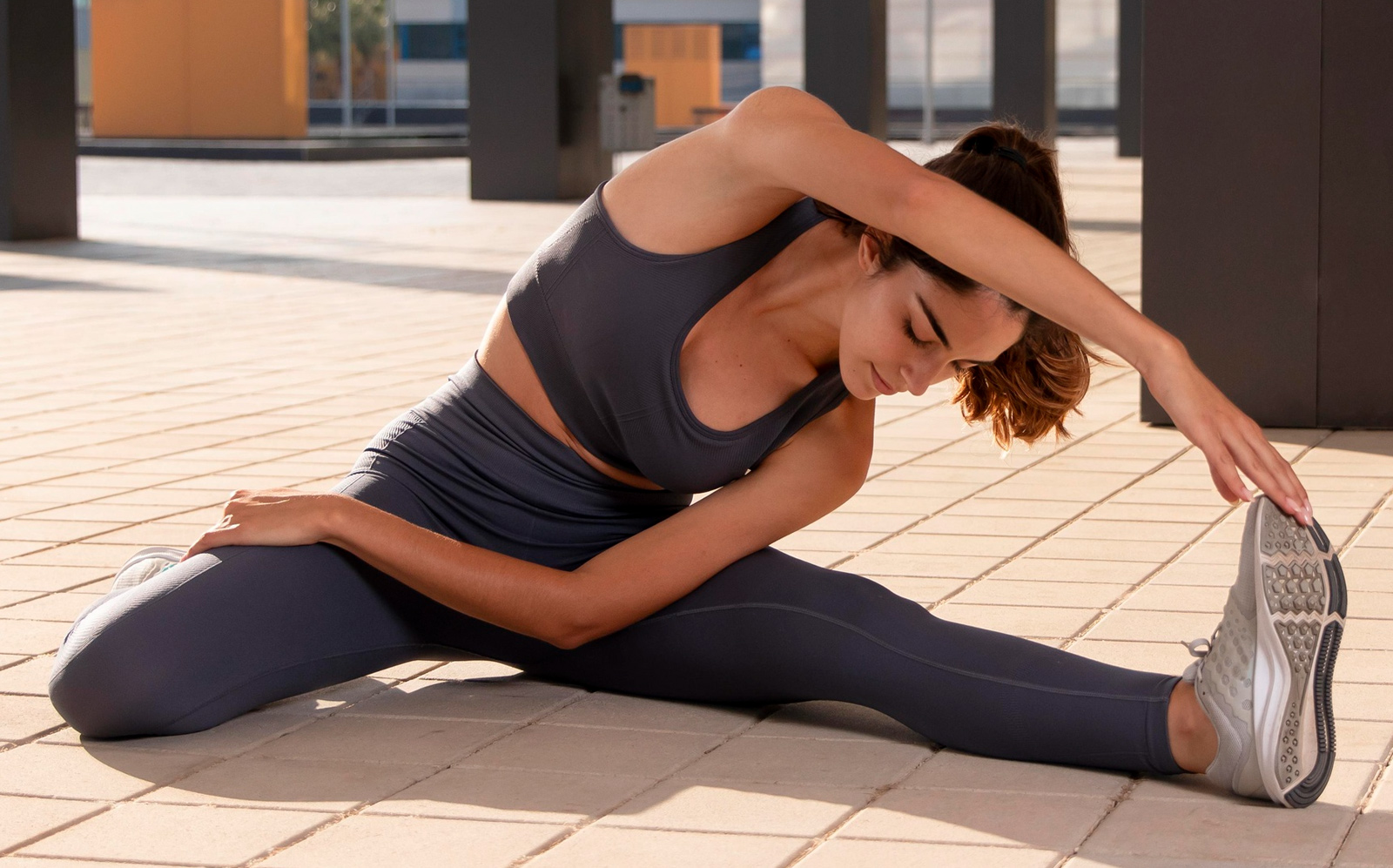
Why Your Body Needs a Daily Full Body Stretching Routine
Modern life is, structurally speaking, a disaster for the human body. The average adult now sits for more than nine hours a day — at desks, in cars, on sofas. Over months and years, this sustained posture shortens the hip flexors, tightens the chest and shoulders, weakens the posterior chain, and quietly robs you of the range of motion you were born with.
The consequences are not just aesthetic. Chronically shortened muscles pull joints out of their optimal alignment, creating patterns of compensation that eventually manifest as lower back pain, knee discomfort, stiff necks, and the kind of morning soreness that makes getting out of bed feel like an event. According to the American Physical Therapy Association, more than 80% of adults experience significant low back pain at some point — and reduced flexibility is a primary contributing factor.
But here's what's easy to miss: flexibility is not fixed. It's a trainable physical quality — as responsive to consistent effort as strength or cardiovascular fitness. A well-structured full body stretching routine, performed daily, can produce measurable changes to your range of motion in as little as three weeks. Not someday. Starting now.
Beyond mobility, a regular stretching practice delivers benefits that extend well past the physical: lower cortisol levels, improved sleep quality, heightened body awareness, and — according to a 2023 study in the Journal of Physiological Sciences — a meaningful reduction in perceived stress. The body and mind share more wiring than most people realize, and releasing physical tension is one of the fastest ways to release mental tension too.
The Science Behind Stretching: What Actually Happens in Your Body
To understand why this routine works, it helps to understand what stretching actually does at a physiological level — because it's not what most people think.
When you hold a stretch for more than about 20 seconds, you're not simply "pulling" a muscle longer in the way you'd stretch a rubber band. What you're doing is influencing the fascia — the web of connective tissue that envelops every muscle group — and triggering neurological adaptations that allow the muscle to tolerate a greater length over time.
The mechanism involves both structural and neural change. Structurally, consistent stretching stimulates the addition of new sarcomeres in series along the muscle fiber — literally making the muscle longer at the cellular level. Neurally, the stretch reflex (the protective mechanism that causes a muscle to contract when it's rapidly lengthened) is gradually re-calibrated, allowing the nervous system to permit a greater range before triggering that protective response.
This distinction matters because it explains why static stretching done consistently produces lasting results, while occasional stretching does not: you need repeated stimulation over time to shift the neural set-point and encourage structural adaptation.
Average improvement in range of motion seen in participants who performed a structured full body stretching routine daily for 6 weeks — compared to 8% in those who stretched inconsistently.
There are three main categories of stretching you'll encounter in any good routine. Dynamic stretching uses movement to take joints through their range without holding — ideal for warming up. Static stretching holds a position to elongate specific tissues — most effective when muscles are already warm. And PNF stretching alternates contraction and relaxation to access even deeper tissue release, though it's best introduced after you have several weeks of basic practice under your belt.
The routine below blends all three intelligently: dynamic movement in the warm-up phase, static holds in the main body of the session, with cues for optional PNF at more advanced stages of practice. You can follow the same structure from week one through month twelve — the progression is in the depth of each hold, not in adding more complexity.
Your 15-Minute Full Body Stretching Routine, Step by Step
This routine is structured in four sequential phases that follow the body's natural preparation and recovery logic. Each phase builds on the one before: you mobilize before you stretch, you work from the top down, and you finish with the lower body — where most adults carry the greatest tension and restriction.
Here's the complete overview:
| Phase | Focus | Duration | Type |
|---|---|---|---|
| Phase 1 | Dynamic Warm-Up | 3 min | Dynamic |
| Phase 2 | Upper Body & Shoulders | 4 min | Static |
| Phase 3 | Core & Spine | 3 min | Static + Active |
| Phase 4 | Lower Body & Hips | 5 min | Static |
Phase 1: Dynamic Warm-Up (3 Minutes)
Never skip this. Attempting to statically stretch a cold muscle is less effective and increases the risk of micro-tears in the connective tissue. These three minutes raise tissue temperature, lubricate the joints with synovial fluid, and prime the nervous system for what's coming.

Phase 2: Upper Body & Shoulder Stretches (4 Minutes)
The upper body is where desk workers and phone users accumulate the most tension. Rounded shoulders, a forward head position, and compressed chest muscles are near-universal in adults who work at computers. These four stretches directly address the muscle groups most responsible for that posture: the deltoids, pectorals, rhomboids, and upper trapezius.
Phase 3: Core & Spine Stretches (3 Minutes)
The spine is the axis of the entire body — and most people treat it like a rigid rod rather than the articulated, mobile structure it's designed to be. This phase focuses on spinal flexion, extension, and rotation, releasing the muscles that run along and between the vertebrae. It also includes Child's Pose, which simultaneously stretches the entire posterior chain while encouraging deep diaphragmatic breathing — the fastest known way to downregulate the nervous system.
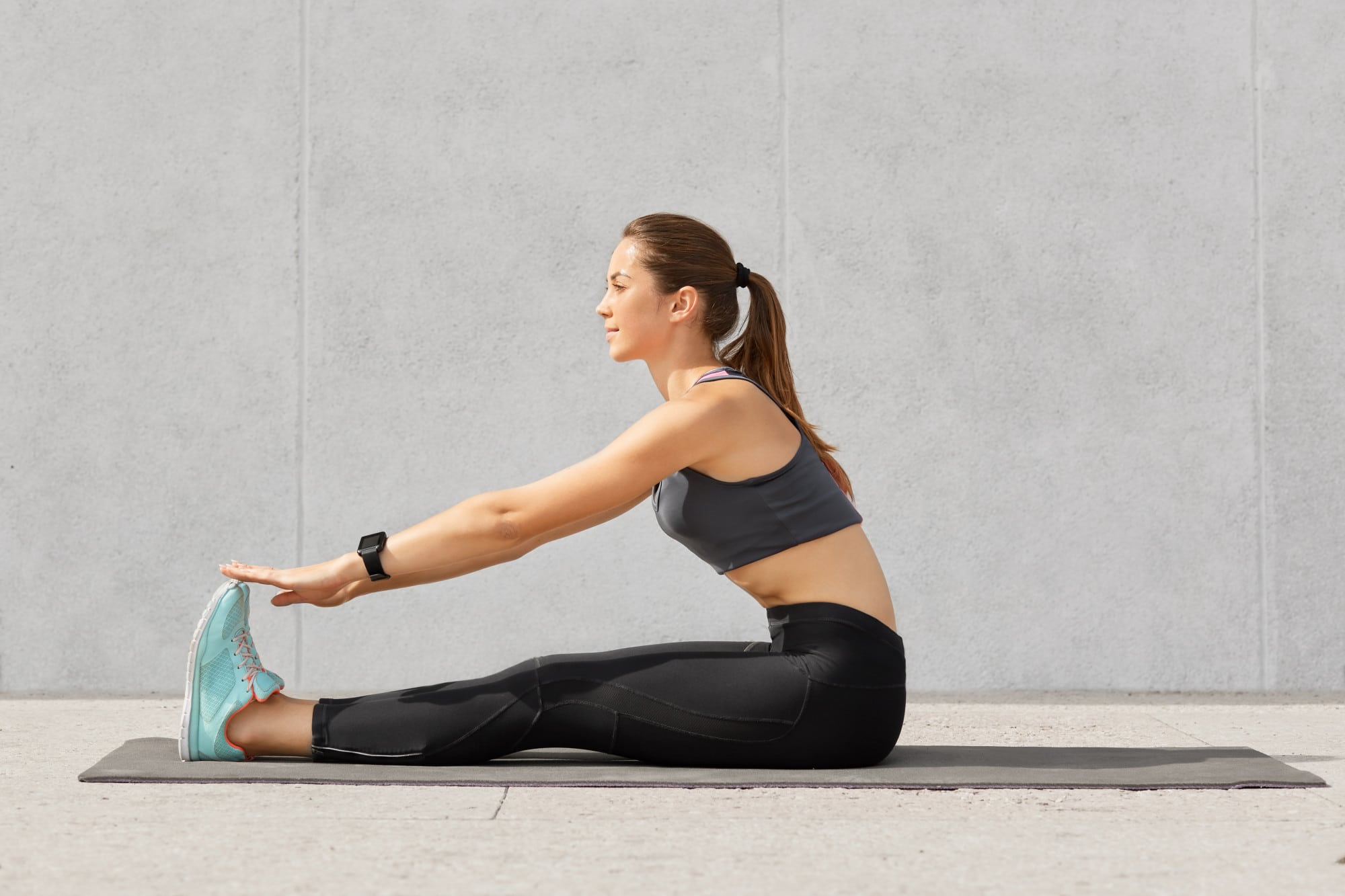
Phase 4: Lower Body & Hip Stretches (5 Minutes)
The lower body receives the most time because it contains the largest, deepest, and most chronically shortened muscles in most adults — the hip flexors, hamstrings, piriformis, and glutes. Tight hips are one of the leading causes of low back pain, and hamstring inflexibility is directly linked to anterior pelvic tilt, which stresses the lumbar spine with every step you take.
Take your time here. These holds are longer, and for good reason: deeper tissues respond to extended, gentle pressure rather than brief, aggressive pulls.
Morning vs Evening: When to Do Your Full Body Stretching Routine
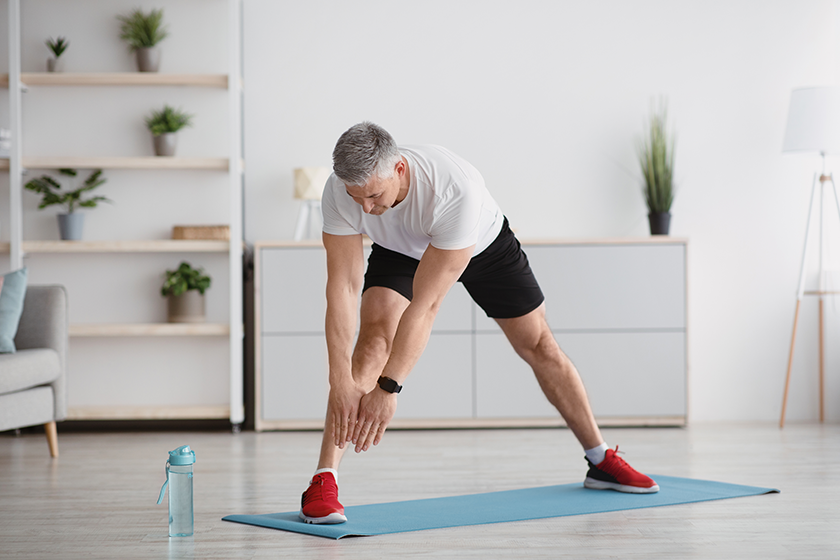
The honest answer is: whenever you'll actually do it. Consistency beats timing every time.
That said, there are real physiological differences between morning and evening stretching — and knowing them lets you tune the routine to your schedule without sacrificing results.
In the morning, core body temperature is lower and muscles are stiffer from hours of relative stillness. This makes the dynamic warm-up phase even more critical — spend an extra 30–60 seconds on it before moving into static holds. Morning stretching is excellent for resetting postural muscles and signals the body to transition from a sleep state to an active one. Think of it as a system reboot: it raises alertness, improves circulation, and sets a clear physical intention for the day.
In the evening, core temperature is naturally higher and muscles tend to be more pliable — especially if you've been active. Static holds can safely be extended (up to 90 seconds) and you're more likely to access deeper ranges. Evening stretching also has a documented effect on sleep quality: the parasympathetic activation from slow, long stretches lowers heart rate and cortisol, priming the body for deeper rest. If you struggle with sleep, an evening flexibility practice may be one of the most effective interventions you haven't tried yet.
If you can only do one, choose the time that fits naturally into your day. If you can do both, use morning for the dynamic phases and a shorter version of the lower body holds, and use evening for a fuller, slower practice.
How Often Should You Do This Full Body Stretching Routine?
Daily. Unequivocally.
Unlike resistance training — which requires 48–72 hours of recovery between sessions targeting the same muscle group — stretching does not break down muscle tissue. It doesn't need recovery days. The adaptation it drives (neurological re-calibration, connective tissue remodeling, sarcomere addition) is cumulative and incremental, meaning it responds best to frequent, low-intensity stimulation rather than occasional high-intensity sessions.
A 2021 meta-analysis published in Sports Medicine reviewed 49 studies on static stretching and concluded that stretching five to seven days per week produced significantly greater flexibility gains than three days per week, even when the total stretching volume was matched. Frequency, it turns out, is the single most powerful variable.
If daily feels impossible at first, start with four days per week and build from there. What matters most in the first month is not how long each session is, but whether it becomes a habit that feels automatic. The methodology behind So Happy Stretching is built around this principle: small, consistent, correctly-paced sessions outperform ambitious plans that collapse under the weight of their own ambition.
Tracking Your Progress the Smart Way
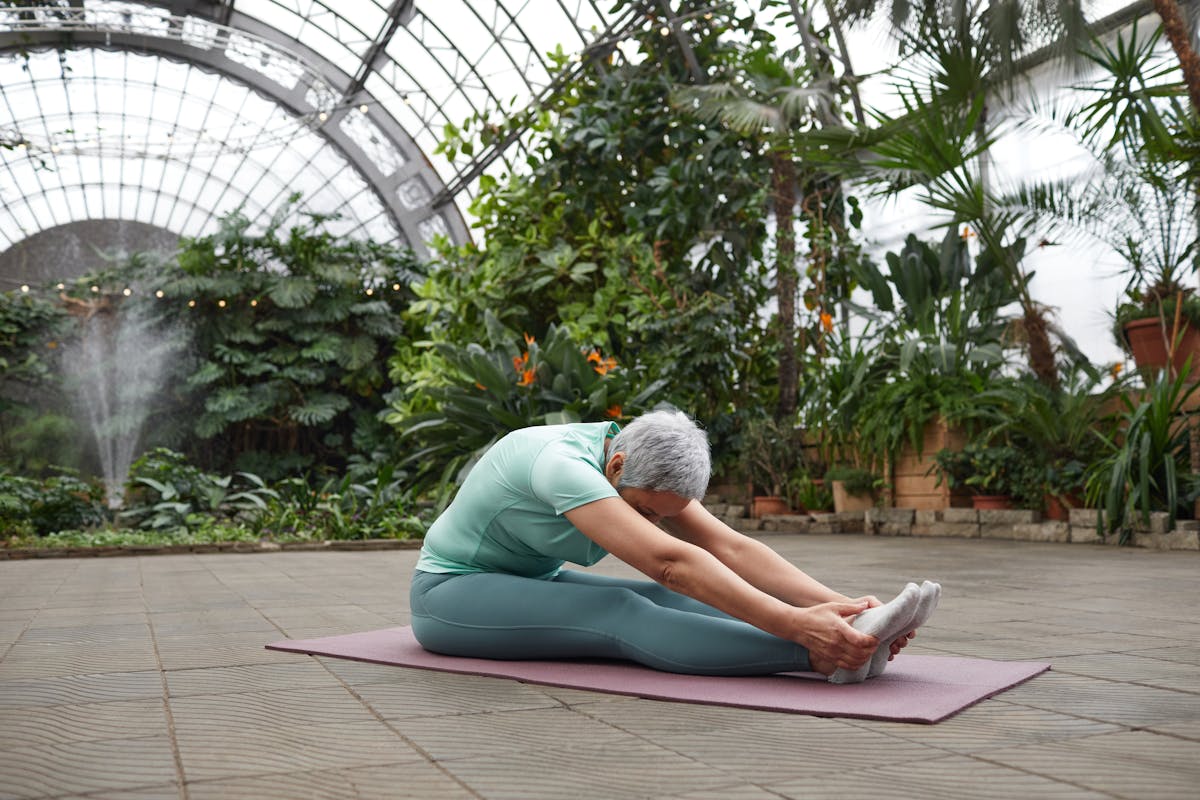
One of the most motivating things you can do for a stretching practice is measure it. Not the number of days — that's a proxy metric. What you want to track is actual range of motion: how far your hamstring fold goes, how deep your hip rotation is, how far your shoulders can move in each direction.
Without measurement, you're flying blind. You might be making excellent progress and not know it — or you might be stuck in a plateau and not realize you need to adjust. Progress in flexibility is slow enough that subjective feel is unreliable; you need objective data to stay motivated and to make smart decisions about your practice.
Simple self-measurement methods include the sit-and-reach test (floor seated, reaching toward your toes), the shoulder rotation test (passing a broomstick behind your body with arms overhead), and the hip flexor lunge test (how low your back knee goes before the lumbar spine tilts). Take these measurements at the start of your practice and every two weeks thereafter.
If you want something more precise, the So Happy Stretching app uses AI camera technology to measure your actual joint angles through your phone camera — giving you a baseline flexibility score and tracking each metric over time. Users report that seeing their numbers improve is what keeps them coming back when motivation dips. There's a reason we track anything we care about improving. Flexibility is no different.
of So Happy Stretching users report feeling noticeably more mobile after just 4 weeks — with AI-measured range-of-motion data to back it up, not just subjective feel.
Common Mistakes That Undermine Your Full Body Stretching Routine
Even with the right exercises and the right schedule, certain habits consistently sabotage flexibility progress. These are the ones we see most often:
Bouncing through stretches. Also called ballistic stretching, this activates the muscle's stretch reflex — the very mechanism you're trying to gradually recalibrate. Bouncing tells the nervous system the muscle is under threat and causes it to contract, not relax. Keep all holds smooth and still.
Holding your breath. Breath and flexibility are physiologically linked. When you hold your breath, you activate the sympathetic nervous system ("fight or flight"), which increases muscle tension. When you breathe slowly and deeply, you activate the parasympathetic system ("rest and digest"), which is necessary for muscles to genuinely release. Exhale into each stretch; breathe slowly throughout the hold.
Stretching cold muscles. Attempting to deeply stretch without a warm-up is less effective and slightly risky. Even five minutes of light movement — a brisk walk, some jumping jacks, or the dynamic warm-up phase in this routine — dramatically increases the pliability of connective tissue. Never skip Phase 1.
Going for pain rather than tension. There is a meaningful difference between the "productive discomfort" of a good stretch and actual pain. Pain is a signal from the nervous system that tissue damage may be occurring. You should feel significant tension and mild discomfort — never sharp, stabbing, or shooting sensations. If you feel those, back off immediately.
Being inconsistent and compensating with longer sessions. Doing a two-hour flexibility session on Sunday to make up for six days of nothing is not how tissue adapts. The nervous system responds to regular, repeated signals — not sporadic intensity. Four 15-minute sessions in a week are categorically more effective than one 60-minute session. Build the habit before you build the volume.
Comparing your flexibility to others. Flexibility has a significant genetic component, influenced by joint structure, muscle insertion points, and connective tissue composition. Someone who appears more flexible than you may simply have different anatomy — not more dedication. Our methodology always calibrates to your baseline, not a theoretical average. The only valid comparison is you today versus you four weeks ago.
Frequently Asked Questions
Most people notice measurable flexibility improvements within 3 to 6 weeks of daily practice. The first changes are neurological — your nervous system becomes more comfortable allowing a greater range of motion before triggering the protective stretch reflex. Structural changes (sarcomere addition, fascial remodeling) take longer — typically 8 to 12 weeks of consistent practice. Among So Happy Stretching users who practice four or more times per week, 87% report feeling noticeably more mobile after just four weeks, with AI-measured range-of-motion data to confirm it.
The dynamic warm-up phase (Phase 1) is suitable before any form of exercise and will improve your performance and reduce injury risk. However, long static holds (Phases 2–4) are best done after exercise, not before — static stretching temporarily reduces the stretch-shortening cycle efficiency of muscles, which can marginally reduce strength and power output if done immediately before lifting or sprinting. If this is a standalone flexibility session, not connected to a workout, any time of day is appropriate with the full warm-up phase performed first.
Yes — and daily practice is actually what the research supports for maximum flexibility gains. Unlike strength training, gentle to moderate static stretching does not cause significant muscle damage and does not require recovery days. The key qualifier is intensity: you should be stretching to the point of tension and mild discomfort, not pain. If you experience soreness after a session (which occasionally happens in the first week or two), shorten the hold times rather than skipping days entirely.
Yes — when done daily and correctly. A study published in the Journal of Human Kinetics found that 15 minutes of daily structured stretching was sufficient to produce statistically significant flexibility improvements after 8 weeks, comparable to 30-minute sessions done three times per week. The sessions don't need to be long; they need to be consistent and methodical. What the 15-minute routine in this article does differently from a casual stretch is that it covers every major muscle group in a specific order, uses appropriate hold durations, and integrates both dynamic and static methods intelligently.
This guide gives you the structure — the right exercises, the right order, the right hold times. What the So Happy Stretching app adds is personalization and measurement. Before your first session, the app's AI camera technology measures your actual range of motion through your phone — your real hamstring flexibility, your actual shoulder mobility, your hip rotation angle — and builds a program calibrated to your starting point. As you practice, it tracks changes over time with the same precision. You're not guessing whether you're improving; you can see the numbers change. The methodology behind the app was also designed by flexibility experts with a specific focus on joint safety and progressive loading — which matters a great deal if you're starting from a place of significant stiffness or if you have a history of joint issues.
Ready to Make This Routine Personal?
The So Happy Stretching app measures your actual flexibility with AI — then builds a program designed specifically for your body. No guesswork, no generic plans.
Download Free on App StoreFree to download · AI assessment from day one · iOS only