
What Is Dynamic Stretching — And How Is It Different?
Dynamic stretching is a method of preparing the body for movement by taking muscles and joints through their full range of motion using controlled, smooth, continuous movements. You don't hold a position. You move through it — repeatedly, with intention — and the movement itself produces the preparatory effect.
This distinguishes it from static stretching, where you hold a lengthened position for 20–60 seconds, and from ballistic stretching, which uses momentum and bouncing to force the body beyond its comfortable range. Dynamic stretching is the middle path: active, purposeful, and calibrated to what your body is about to do.
Examples you've likely already performed without knowing the name: leg swings before a run, arm circles before swimming, walking lunges before a gym session. Each of these is dynamic stretching — movement that rehearses the mechanics of what's coming while simultaneously raising tissue temperature and lubricating joints.
The concept has been part of elite athletic training for decades. Olympic sprinters, professional dancers, and surgical sports teams have used dynamic warm-up protocols since at least the 1990s. What changed is the research — a significant body of evidence has accumulated showing that dynamic stretching before exercise improves performance, while static stretching before exercise can temporarily impair it. This distinction is now widely accepted across sports science, physical therapy, and strength training fields.
There's one more thing worth clarifying: dynamic stretching is not the same as a general cardio warm-up. Both are valuable, and the best warm-up includes both. But only dynamic stretching specifically addresses joint mobility, muscular lengthening, and the activation of the movement patterns you're about to load.
The Science: What Dynamic Stretching Actually Does to Your Body
To understand why dynamic stretching works — and why it works better before exercise than static stretching — you need to understand what physically happens in your body during those five minutes of movement.
Muscle temperature rises. Every degree of temperature increase makes muscle tissue more pliable, more responsive to load, and less prone to micro-tears under eccentric force. Dynamic movements — unlike static holds — generate internal heat through active muscular contraction, making tissues genuinely more elastic before you begin.
Synovial fluid is distributed through the joints. Synovial fluid is your body's natural joint lubricant. In a resting state, it's concentrated in specific areas of the joint capsule. Movement distributes it across the full articular surface — reducing friction, absorbing impact more effectively, and decreasing the risk of cartilage wear. Static holds don't achieve this. Dynamic movement does.
Neuromuscular activation improves. The neuromuscular system needs to be 'switched on' before it can perform reliably. Dynamic stretching — particularly movement patterns that mirror the upcoming exercise — primes the motor pathways, reduces reaction time, and increases the rate of force development. This is why athletes who perform dynamic warm-ups consistently out-perform those who don't on explosive tasks.
The stretch reflex is calibrated — not suppressed. Static stretching before exercise temporarily reduces the sensitivity of the GTO and muscle spindle activity, which translates to measurable reductions in strength and power output lasting 30–60 minutes. Dynamic stretching, by contrast, stimulates these receptors in a way that leaves them functional and responsive for exercise.
Average reduction in peak muscle force output observed after static stretching immediately before strength exercise — a loss that dynamic stretching does not produce, according to research in the Journal of Strength and Conditioning Research.
Dynamic Stretching vs Static Stretching: When to Use Each
This is not an either/or question. Both types of stretching are valuable — for different purposes, at different times. The mistake is mixing them up: doing static holds before exercise (which reduces performance and doesn't adequately prepare the body) or relying solely on dynamic movement and never developing lasting flexibility gains.
The principle is simple: dynamic before, static after. Dynamic stretching prepares. Static stretching develops. Use each at the time it's designed for.
| Factor | Dynamic Stretching | Static Stretching |
|---|---|---|
| Best used | Before exercise | After exercise |
| Movement type | Controlled, continuous motion | Held position, 20–60 sec |
| Effect on strength | Neutral or positive | Temporarily reduces (–5–8%) |
| Raises muscle temp. | Yes | Minimally |
| Improves flexibility | Active / functional range | Structural / lasting gains |
| Joint lubrication | Excellent | Limited |
| Neuromuscular activation | Primes the system | Reduces reflex sensitivity |
The practical takeaway: build your warm-up entirely from dynamic stretching, and reserve static holds for your cool-down or dedicated flexibility sessions. If you're following a full body stretching routine for flexibility development, dynamic movement still belongs at the very beginning — even when the session is primarily static.
10 Best Dynamic Stretching Exercises
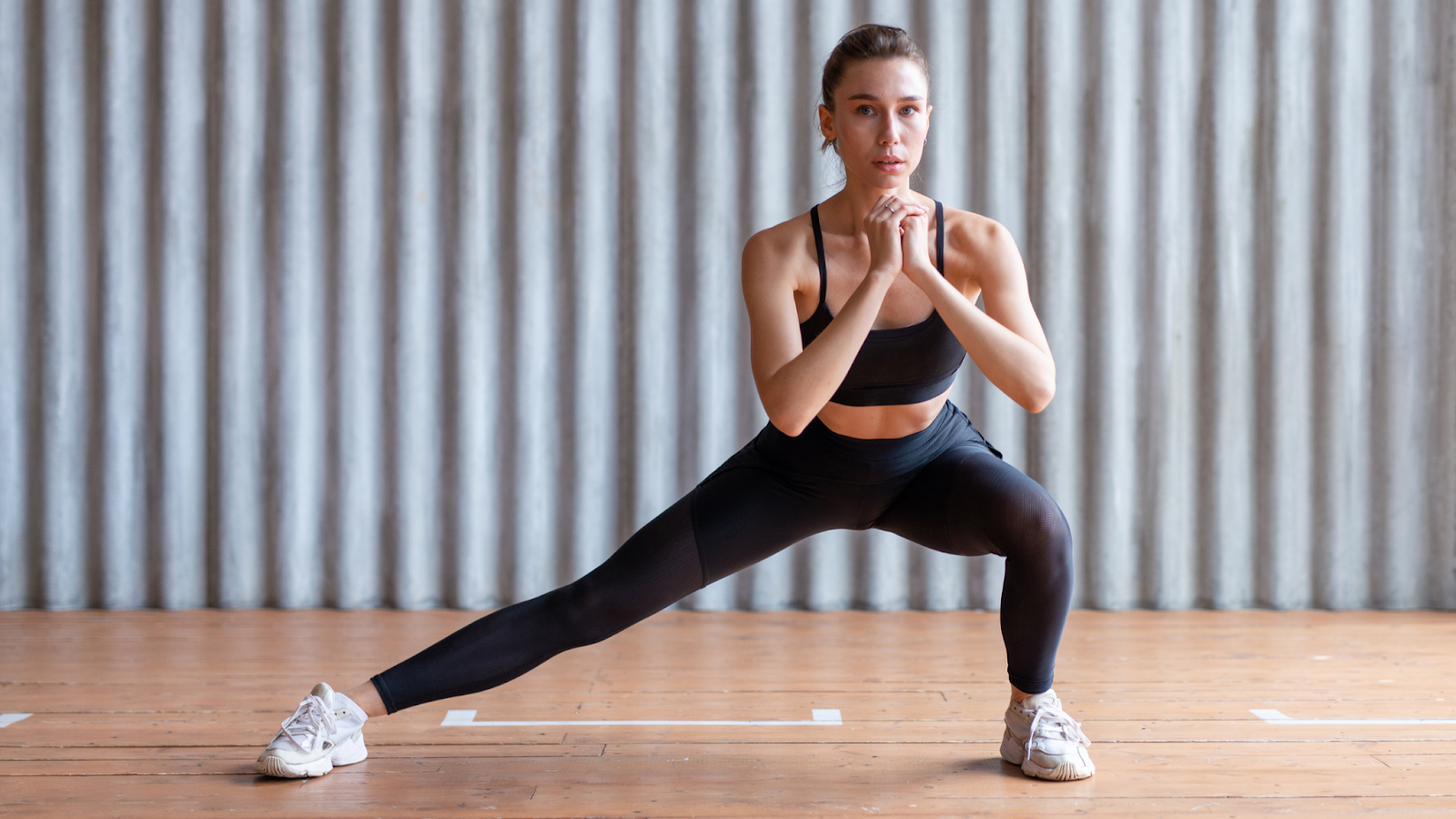
These ten exercises cover the full body in order from extremities inward — a logical progression that mirrors how professional athletes and physical therapists sequence dynamic warm-ups. Together, they address every major joint and muscle group that will be demanded in any form of exercise.

Your 5-Minute Dynamic Stretching Warm-Up Routine
This routine combines the most effective exercises from the list above into a sequenced, full-body warm-up you can use before any workout, run, or flexibility session. It progresses logically — upper body first, then core and hips, then lower body, finishing with full-body activation — and takes exactly five minutes at a calm, deliberate pace.
You don't need a mat, equipment, or significant space. You need about 3 meters of clear floor and five minutes of attention.
Adapting Dynamic Stretching to Your Activity
The five-minute routine above works as a universal warm-up. But the most effective dynamic stretching protocols are specific to what comes after them. The principle: the movements in your warm-up should mirror the movements in your session, at lower intensity.
- Forward leg swings
- Lateral leg swings
- High knees
- Butt kicks
- Walking lunges
- Ankle circles
- Arm circles
- Thoracic rotation
- Hip circles
- Walking lunge + rotate
- World's Greatest Stretch
- Inchworm
- Hip circles
- Leg swings (all planes)
- Inchworm
- World's Greatest Stretch
- Thoracic rotation
- Shoulder circles
If your session targets a specific muscle group, weight your dynamic warm-up toward that area. Leg day? More leg swings, hip circles, and walking lunges. Shoulder pressing? More arm circles, thoracic rotation, and band pull-aparts. The warm-up should feel like a preview of the session, not a random assortment of movements.
One more consideration: duration scales with intensity. A light jog followed by moderate strength work needs five minutes of dynamic preparation. A sprint session, a martial arts class, or a gymnastics practice demands closer to ten — with the later minutes progressively increasing in tempo to approach the demands of the full session.
The optimal duration for a dynamic stretching warm-up before exercise — with longer preparation recommended proportionally to the intensity and speed demands of the upcoming session.
Common Dynamic Stretching Mistakes — And How to Avoid Them
Dynamic stretching is simple to understand and relatively easy to perform, but a few persistent errors undermine its effectiveness and occasionally cause the injury it's meant to prevent.
Moving too fast, too soon. The most common error. Dynamic stretching is controlled movement — not explosive or rushed. Starting with rapid, wide-amplitude swings on a cold muscle activates the stretch reflex and can cause strain in the very tissue you're trying to prepare. Begin each exercise with reduced range and increase gradually over the first few reps. By the last rep of each set, your range should be naturally larger — not forced.
Confusing dynamic stretching with ballistic stretching. Ballistic stretching uses momentum and bouncing to force the body past its available range. Dynamic stretching stays within your available range and moves through it with control. The distinction matters: ballistic movement triggers the myotatic stretch reflex, causing the muscle to contract protectively, which is the opposite of preparation. Smooth, intentional, continuous movement is what you're after.
Skipping the upper body. Most people instinctively warm up their lower body — a few leg swings, maybe some hip circles — and consider themselves ready. The upper body, particularly the thoracic spine and shoulder complex, receives almost no preparatory attention before upper-body training or racquet sports. Arm circles and thoracic rotations are quick and high-impact, and missing them is one of the most common upstream causes of shoulder impingement and rotator cuff strain.
Holding positions during a 'dynamic' warm-up. Some people perform what they call a dynamic warm-up but stop at the end range of each movement and hold it for a few seconds. This reverses the physiological effect — you're now doing static stretching, which temporarily reduces force production. Keep moving. If you notice yourself pausing at the end of a range, reduce the amplitude slightly and focus on the flow.
Not matching the warm-up to the workout. A generic five-minute warm-up is better than nothing, but the most effective dynamic preparation is specific to what follows. If you're about to do heavy deadlifts, the posterior chain needs more preparation than the shoulders. If you're running intervals, the hip flexors and knee joints take priority. Think about what you're about to load, and bias your warm-up toward those structures.
Frequently Asked Questions
Dynamic stretching is a method of preparing the body for exercise by moving muscles and joints through their full range of motion using smooth, controlled, continuous movements — without holding any position. It differs from static stretching (which holds positions for 20–60 seconds) and ballistic stretching (which uses bouncing or momentum). Dynamic stretching raises muscle temperature, lubricates joints, activates the neuromuscular system, and rehearses the movement patterns you're about to perform — making it the most effective form of warm-up before exercise.
Before. Dynamic stretching is a pre-exercise tool. It primes the body for movement without temporarily reducing strength or power output the way static stretching can. After your workout, when muscles are warm and pliable, is the ideal time for static holds — which are more effective for developing lasting flexibility when done on warm tissue. For a complete flexibility development program that combines both approaches, see our full body stretching routine guide.
Five minutes is the minimum for general exercise preparation. Ten minutes is recommended before high-intensity, high-speed, or contact activities. The rule of thumb: the more explosive or high-impact the upcoming movement, the longer and more specific the warm-up should be. A five-minute dynamic warm-up before a moderate strength session is genuinely sufficient; the same five minutes before a sprint session or martial arts class is cutting it short.
No — and the distinction matters. Dynamic stretching uses smooth, controlled movements within your available range of motion. Ballistic stretching uses momentum and bouncing to force the body beyond its range. Dynamic stretching is safe, evidence-supported, and widely recommended; ballistic stretching activates the protective stretch reflex, can cause muscle strain, and is not generally recommended except for highly trained athletes with specific performance needs. If your movements feel bouncy or uncontrolled, slow down and reduce the range until you can execute each rep with full control.
Dynamic stretching improves active range of motion — the range you can reach and control under your own muscular power. This is actually the more functionally relevant form of flexibility for athletic performance and injury prevention. For structural, lasting flexibility gains (the kind that show up in a sit-and-reach test or a deeper split), consistent static stretching after exercise is more effective. The best approach for comprehensive flexibility development uses both: dynamic before sessions to activate, static after sessions to develop. The So Happy Stretching methodology is built on exactly this principle.
Know Your Flexibility Baseline Before You Train
Dynamic stretching prepares your body. But to know exactly what to prepare — and how to measure whether it's working — you need a baseline. So Happy Stretching's AI assessment measures your actual range of motion in under 5 minutes.
Download Free on App StoreFree to download · AI assessment from day one · iOS only